From a Failed Part to Tested Movement
The Door's Movement Starts the Conversation
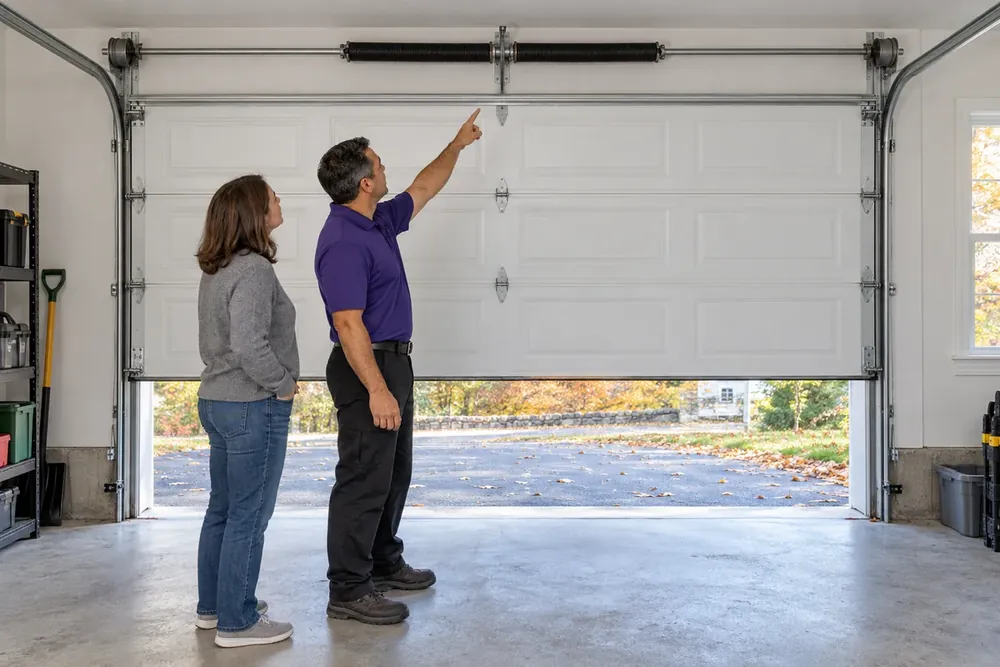
The door's panels, the hinged horizontal sections across the opening, give you an easy starting point for describing the problem. Say whether they stay down, stop halfway or rise unevenly. You do not need to identify a spring type or diagnose the opener. A plain description helps your technician decide which parts need attention.
Call and share your town, street address and what happened when the door last moved. Mention a trapped car or an opening that leaves the garage exposed. A bang above the door, a cable hanging at one side or a motor humming without movement are useful details. Knowing the opener brand helps with parts, but you can call without it.
Springs and Cables Carry the Weight
The torsion spring, a tightly wound coil on the bar above the door, supplies lifting assistance as the door moves. Lift cables run down its sides and wrap around grooved drums at the bar's ends. A failure in either system can make the door feel heavy or let one side drop.
Your technician inspects those parts together rather than assuming the opener caused every stalled door. They check the spring arrangement, cable condition, drum position and door balance. The examination also covers the bottom brackets where the cables attach. Those brackets hold tension, so leave their fasteners and the spring hardware alone.
Rollers and the Opener Explain the Travel
The rollers, small wheels along the door's sides, guide the panels through curved metal tracks. Worn wheels, loose supports or bent track can interrupt movement. Your technician checks the hinges and panel condition along that path, including damage that would make a new roller an incomplete fix.
The opener motor moves the door through a rail and connecting arm. Your technician checks its drive parts, wall control and remote response after assessing the lifting hardware. Photo-eye sensors near the floor detect an obstruction across the opening; their alignment and wiring belong in the inspection too.
The Repair Scope Comes With a Price
The damaged parts and the work needed to restore movement form the repair scope. One of our local garage door partners explains the proposed repair, suitable replacement parts and the price to you before starting. Door size, weight, related damage and access to the hardware can change the work involved.
Ask about any choice between repairing a component and replacing an assembly during that explanation. You approve the work after the cause and proposed fix are clear. Your technician then completes the agreed repair and checks how the repaired parts work with the rest of the door.
Safety Checks Complete the Job
The opener's closing controls and safety reversal need testing alongside smooth door travel. Your technician checks movement, balance and the obstruction sensors after the repair, then explains which components changed and how to follow the opener's maintenance instructions.
While waiting, keep children, pets and vehicles away from the damaged door. Stop using the opener on a broken spring or crooked door, and unplug it only when you can reach the plug safely. Leave a raised, unstable door in place without walking underneath or pulling its release cord.