
In short
- A broken spring, snapped cable or worn roller usually calls for replacing the failed part when the surrounding door remains sound.
- Several damaged sections, unavailable matching panels or rust through the bottom can make a complete new door the practical choice.
- An opener fault needs separate diagnosis because replacing the motor unit does not repair damaged door hardware.
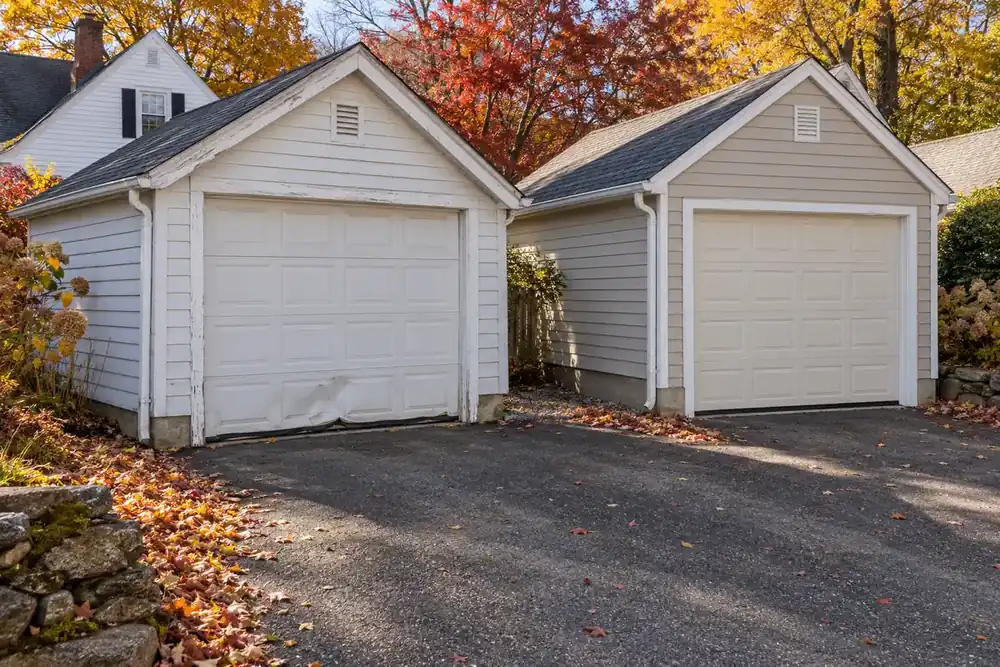
Part Failures and Damage Across the Door
A garage door repair or a decision to replace the whole door starts with the failed part and the condition of everything supporting it. One noisy roller does not condemn sound sections. Several buckled panels, however, need more than a roller replacement. Your technician separates the immediate fault from damage that would remain after a small repair.
Springs, Cables and Rollers
The spring above the door or beside its tracks balances the weight, so a single break usually calls for spring replacement rather than a new door. Your technician checks the other spring, where fitted, and chooses the correct replacement for the door. A gap in a torsion spring or a sudden heavy door is a reason to stop using the opener.
The lift cables connect the lifting assembly to the bottom corners. A snapped cable can leave the door tilted, but sound sections may still be kept. Your technician examines both cables, their attachment points and the lifting hardware. Clopay's maintenance guidance directs homeowners to professional help for broken springs and frayed cables.
Rollers are the wheels inside the side tracks. Worn rollers can be replaced without replacing the door. Repeated derailment needs a broader inspection: bent tracks, damaged attachment points or weakened sections can keep causing trouble after the wheels change. A replacement door becomes relevant when the existing sections cannot safely support correct travel.
Sections, Reinforcement and Bottom Damage
The sections are the horizontal panels, and the reinforcement bars across them are struts. One dented section may be replaced when a compatible panel exists and the remaining door is sound. Clopay's panel replacement explanation identifies model, size and section position as information needed for a matching replacement; your technician handles that identification.
Several damaged sections can make a full door replacement more sensible. A discontinued model can also rule out a suitable panel match. The Clopay door FAQ makes replacement-section availability dependent on continued manufacture of the model. A panel that merely looks similar can have the wrong joints or dimensions.
The bottom seal is replaceable when only the flexible strip is torn. Rot or rust through the bottom section affects the material supporting the hardware and needs closer assessment. Your technician checks whether one sound replacement section solves the problem or whether deterioration extends through the door.
Repair and Replacement by Part
The part's condition and compatibility determine whether a targeted repair solves the problem or a larger replacement deserves consideration.
| Part or condition | Repair makes sense when | Replacement deserves consideration when |
|---|---|---|
| Spring or cable | The lifting part failed and the door remains structurally sound | Damage also extends into sections and attachment points |
| Roller or track | Worn wheels or isolated rail damage explain the fault | Repeated derailment comes from damaged door structure |
| Door section | One panel is damaged and a compatible section exists | Several panels are damaged or matching sections are discontinued |
| Bottom edge | The seal is torn but the section is sound | Rust or rot has weakened the section and surrounding door |
| Opener | A specific repairable fault has been identified | Safety operation cannot be restored or suitable parts are unavailable |
| Uninsulated door | The door is sound and suits the garage's use | A heated garage would benefit from an insulated replacement |
The Opener and Insulation Decision
The garage door opener needs repair, or you may replace the unit when its safety functions cannot be restored or compatible parts are unavailable. A failed remote battery, wall control lock setting or dirty photo-eye lens does not establish that the motor needs replacement. Your technician diagnoses the controls, drive and door balance separately.
The reversing system is a safety requirement, not an optional upgrade. CPSC's safety advice calls for repair or replacement when an automatic opener fails to reverse. Leave a faulty unit out of use rather than bypassing its protection.
An uninsulated door on a heated garage presents a comfort decision even when its hardware works. Clopay's insulation overview explains how insulation limits heat transfer. Your technician can discuss an insulated door, the seals and the existing opening without assuming that insulation alone fixes every draft.
Door Replacement Safety FAQ
Door removal and installation involve heavy sections and stored spring tension that your technician must control.
Q: Can I replace my own garage door? A: Have your technician handle replacement, including spring tension, cable connections and section removal; ordinary household tools do not make those steps safe.
Keep away from a leaning or partly suspended door. Unplug the opener if its plug is safely accessible, and do not operate it with a broken spring or crooked door. Checking a remote battery, the wall control's lock switch and photo-eye lenses or alignment is the limit of the homeowner checks described here.
Garage door repair or replacement near Chicopee begins with your call about the damaged part. One of our local garage door partners will set out the scope and cost before work starts. Compare the relevant panel replacement, opener repair or door installation service.