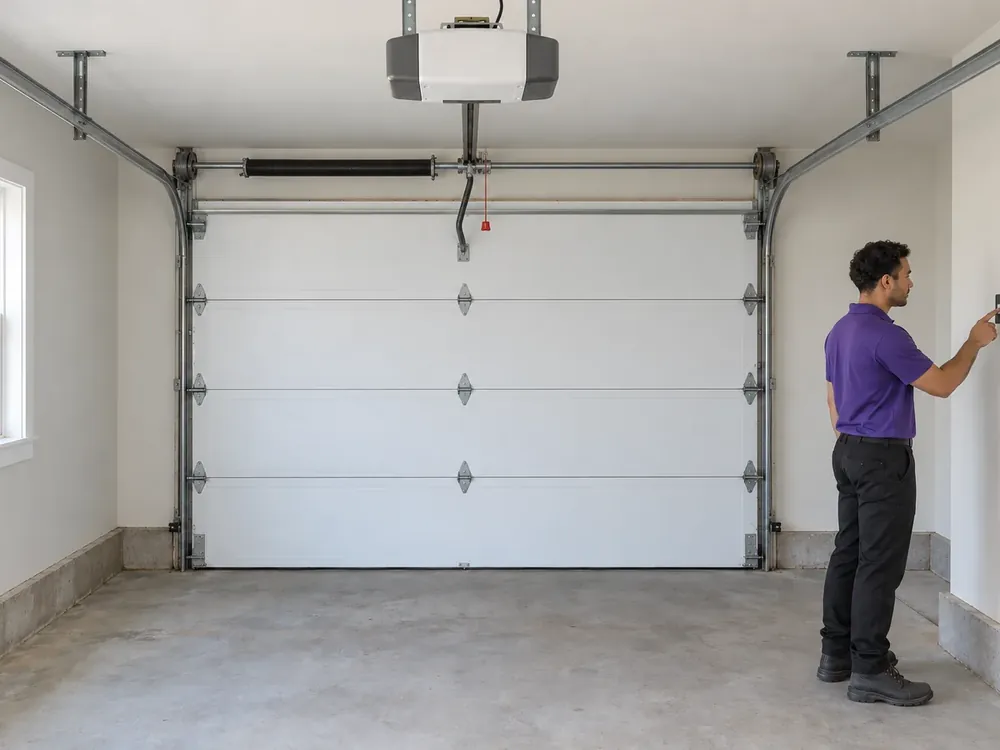
Our local garage door professionals repair the ceiling-mounted opener, its drive parts and safety controls in Chicopee. If the motor hums or the door stops halfway, call and describe the sound or movement; your technician finds the fault and explains the repair.
Calls answered 24/7
Opener motor
Serving Chicopee and nearby
Opener motor
The Parts Behind an Opener That Stops Working
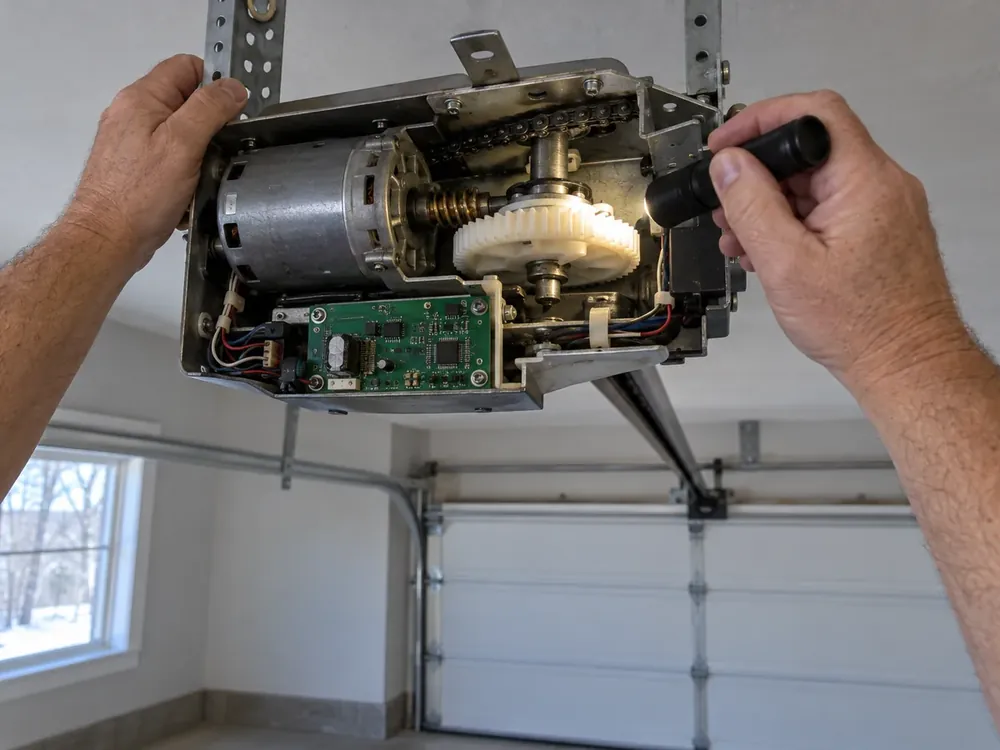
Motor and drive gear: Inside the overhead housing, the motor turns a toothed wheel that transfers movement; electrical faults cause humming, while worn teeth let the motor run without moving the drive.
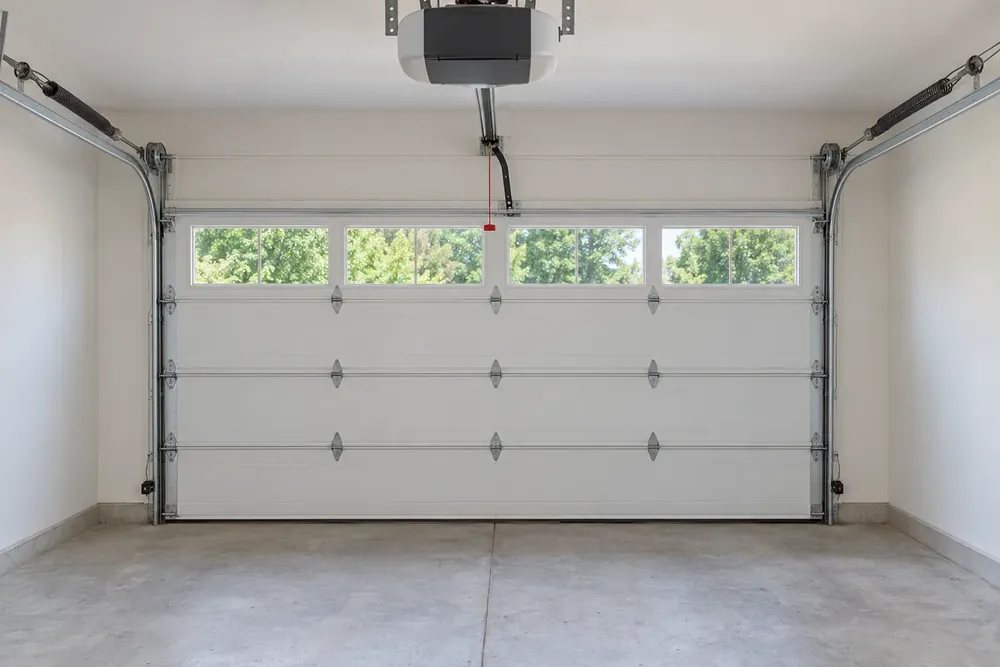
Chain, belt or screw drive: Along the ceiling rail, the moving chain, belt or threaded rod carries motion toward the door; wear causes slipping, rattling or grinding.
Trolley and release cord: The sliding carriage on the rail connects to the door arm, and its hanging cord disengages that connection; a broken or disconnected carriage leaves the door still.
Logic board: The circuit board inside the housing receives commands and controls movement; failure causes missed commands or unexplained stops.
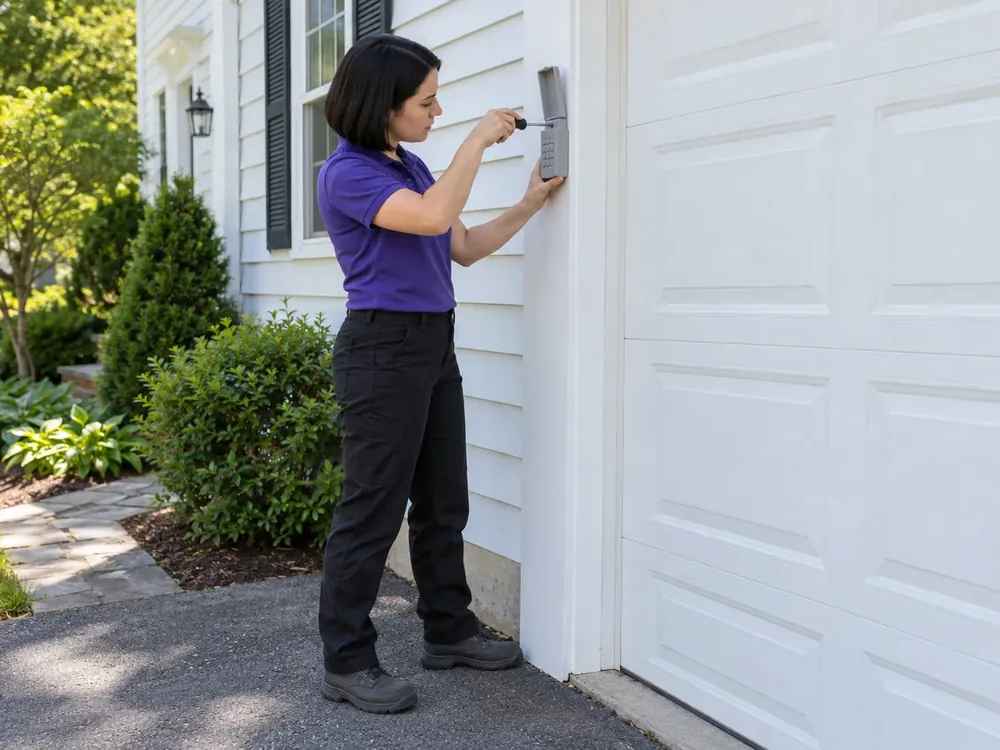
Wall control: The button beside the garage entrance sends a wired command; a damaged switch or wire prevents a response.
Photo-eye safety sensors: Near the floor on either side, these sensors send a light beam across the opening; blocked lenses or misalignment prevent closing.
Garage Door Opener Repair Services in Chicopee
Motor that hums: Your technician checks the overhead motor and the door's mechanical resistance when there is sound but no movement. The repair addresses the fault rather than forcing a heavy door.
Drive gear and trolley: Worn gear teeth or a broken sliding carriage let the opener run without pulling the door. Your technician replaces damaged components and restores the connection.
Drive rail and travel controls: A binding drive or incorrect stopping position causes a halfway stop or reversal before the floor. Your technician checks the rail, door movement and travel settings.
Logic board and wall button: A failed control board, damaged wiring or faulty button leaves the opener ignoring commands. Diagnosis separates an electrical fault from the wall control's lock setting.
Photo-eye sensors: Misaligned sensors or damaged wiring often accompany blinking lights and refusal to close. Your technician restores the beam and tests the closing safeguards.
Opener Symptoms and the Parts Behind Them
The overhead motor, sliding trolley and floor-level sensors give different clues when an opener stops working.
What you notice
The part usually behind it
What to do now
Motor hums but the door stays still
Motor, drive gear or resistance from the door
Stop pressing the button; call without trying to force movement.
Door reverses while closing
Photo eyes, travel controls or a binding door
Keep the opening clear and describe where reversal starts.
Opener light blinks
Sensor circuit or a model-specific fault indicator
Call; visible lens dirt and alignment are useful observations.
Opener runs but the trolley stays put
Drive gear, chain, belt or carriage connection
Leave the rail alone and request diagnosis.
Grinding comes from the rail
Worn drive components or a damaged trolley
Stop operation and unplug the unit if safely reachable.
From the First Call to Tested Operation
Call for garage door opener repair service and describe the motor sound, blinking lights or stopping point. Share the opener model during the conversation if it is visible from the floor.
Your technician inspects the motor, gear, drive, trolley, board, wall control and sensors, then checks whether a door fault is straining the opener.
The findings lead to a defined repair scope, with the parts and labor price explained for your approval before work begins.
Your technician repairs the failed components, verifies door balance and tests full travel, the sensor beam and automatic reversal.
The Parts That Affect Opener Repair Cost
The failed component sets much of the repair cost: a sensor adjustment differs from replacing a drive gear, motor or logic board. Door size and weight matter when an opener fault comes with a balance problem. Older models may need specific compatible parts, while difficult ceiling access adds work.
After-hours scheduling can also affect the total. One of our local garage door partners explains the proposed parts, labor and price so you can approve the work before repairs begin. Read about the broader garage door repair cost factors.
Keep the Rail and Closing Path Clear
The opener rail and trolley must stay untouched while the unit has power. Unplug the opener from a safely reachable outlet; your technician also isolates any backup battery before service, following the model's instructions. Genie's maintenance guidance calls for disconnecting power before maintenance.
Photo eyes near the floor and automatic reversal protect against entrapment. 16 CFR 1211 sets the federal protection requirements; never bypass the installed sensors or reversing system. Keep a door that fails to reverse out of use, as the CPSC advises.
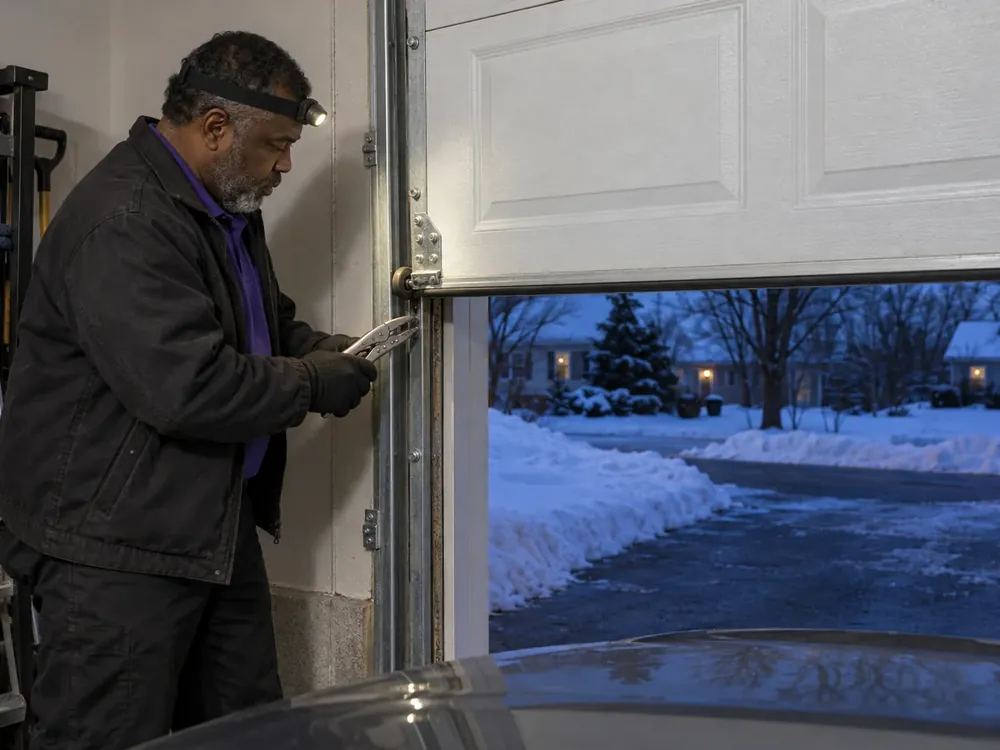
Call now if the door is crooked or a spring has broken; do not run the opener or pull the release cord. A remote battery, wall-control lock setting and visible sensor lenses are safe observations to discuss without touching loaded door hardware.
The failed motor, gear, sensor or circuit board determines the repair scope and price. Access to the ceiling unit, compatible replacement parts and door balance also affect the work. Your technician identifies the cause and explains the proposed repair before starting, so the decision rests on the actual fault rather than the symptom alone.
What does garage door opener repair for a LiftMaster involve?
The LiftMaster opener's drive, controls and safety sensors need diagnosis against that model's instructions. Your technician checks the reported symptom, fault indicators and door movement, then identifies the component responsible. A stalled trolley may need a different repair from a blinking sensor circuit; the brand name alone does not identify the cause.
When does a Genie garage door opener need repair or replacement?
The Genie opener's motor, board and drive need replacement of the whole unit when compatible repairs cannot restore safe operation. A new Genie garage door opener installation is another option when needed features are absent. Your technician compares the damaged parts, remaining condition and safety functions before explaining the repair or replacement scope.
What does a garage door opener repairman check?
The opener's motor, drive gear, rail, trolley and controls are checked alongside the door's balance and movement. Your technician also examines the wall button, wiring and photo eyes. Those checks separate a failed opener component from a door that binds or has a spring problem, so replacing an electrical part does not leave the underlying strain untreated.
How do I arrange garage door opener repair near me?
The ceiling opener or floor-level sensors are the starting point: call and describe which part is making noise, blinking or failing to respond. Chicopee and Springfield are included in the repair area. You can share a visible model name during the call, and your technician diagnoses the fault and explains what needs fixing.
The opener's drive gear grinding above the door needs attention; call to arrange diagnosis and repair by your technician.